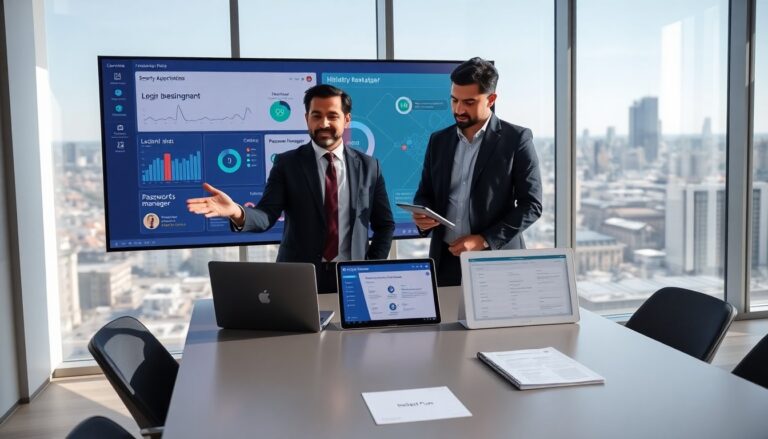


soc for cybersecurity means a team, tools, and processes that watch for threats. The SOC collects logs, analyzes events, and responds to incidents. The SOC reduces risk and speeds recovery. This guide explains what a SOC does, which technologies it uses, and how an organization chooses or builds one. The guide uses clear examples and direct steps for leaders and security teams.
Key Takeaways
- A SOC for cybersecurity centralizes threat detection, investigation, response, and threat hunting to protect organizations from malware, insider threats, and unauthorized access.
- Implementing a SOC enhances business resilience by reducing breach risks, speeding recovery, and supporting compliance with detailed logs and reports.
- Key SOC technologies include SIEM for log management, EDR for device monitoring, network sensors for traffic analysis, SOAR for automation, and cloud-native tools for comprehensive visibility.
- SOC teams comprise roles from managers to tiered analysts and incident responders, all guided by clear policies, playbooks, and regular training exercises to maintain readiness.
- Organizations can choose between building an in-house SOC for full control or outsourcing to managed SOC services for scalability and cost predictability, depending on risk profile and resources.
- Measuring SOC effectiveness through metrics like mean time to detect and respond ensures continuous improvement and justifies investment in cybersecurity defenses.
What a SOC Is and Why Organizations Need One
A SOC for cybersecurity serves as a central unit that defends an organization. It monitors networks, endpoints, cloud services, and user activity. It detects malware, phishing, insider threats, and unauthorized access. It alerts staff and takes action to contain threats. Many organizations face frequent threats. A SOC reduces dwell time and limits damage.
Organizations gain compliance support from a SOC. The SOC collects evidence that auditors can review. The SOC produces logs, reports, and timelines that help meet regulations. Organizations also gain operational clarity. The SOC tracks trends and shows where controls fail.
A SOC improves business resilience. The SOC helps restore systems after an attack. It coordinates with IT, legal, and communications teams. It documents lessons learned and improves defenses. The SOC also provides a single point of contact during crises. That clarity speeds decisions and reduces confusion.
Leaders should view a SOC as an investment. The SOC lowers the chance of costly breaches. It also lowers incident recovery time. For many organizations, the SOC pays for itself by preventing downtime and data loss.
Core Functions, Technologies, and Roles Inside a SOC
A SOC for cybersecurity performs detection, investigation, response, and threat hunting. Detection uses automated rules and machine analysis. Investigation uses analysts to validate alerts and find root causes. Response uses playbooks to contain and remediate threats. Threat hunting uses hypothesis-driven searches to find hidden intrusions.
Key technologies enable the SOC. A SIEM centralizes logs and runs correlation rules. Endpoint detection and response (EDR) agents monitor device behavior. Network detection sensors inspect traffic and flag anomalies. A SOAR system automates repetitive tasks and documents steps. Threat intelligence feeds provide context and indicators.
The SOC also needs visibility into cloud services. Cloud logs, identity services, and API telemetry feed into the SIEM. The SOC uses cloud-native monitoring tools to track misconfigurations and privilege misuse.
Roles in a SOC follow clear responsibility lines. A SOC manager sets strategy and measures outcomes. Tier 1 analysts triage alerts and escalate confirmed threats. Tier 2 analysts perform deep investigations and forensic tasks. Tier 3 analysts hunt for advanced threats and tune detection logic. Incident responders coordinate containment and remediation. A threat intel analyst enriches alerts with context.
The SOC needs policies and playbooks. Playbooks define steps for common incidents such as ransomware or phishing. Policies set escalation rules, evidence handling procedures, and reporting cadence. Regular exercises test the team. Tabletop drills and live simulations reveal gaps and sharpen response skills.
Building, Measuring, and Choosing Between In‑House and Managed SOCs
An organization that plans a SOC for cybersecurity must weigh build versus buy. Building an in-house SOC gives control over technology and process. It requires hiring trained analysts, acquiring tools, and running 24/7 operations. The organization must budget for staff, training, and tool upgrades.
A managed SOC service provides external analysts and infrastructure. The provider monitors 24/7 and sends alerts and reports. The provider can scale faster and start monitoring sooner. The organization keeps ownership of data and defines response rules. A managed SOC often fits organizations that lack staffing or want predictable costs.
Decision factors include risk profile, budget, and skill availability. High-risk firms with strict control needs often build in-house. Smaller firms or firms that want fast coverage often choose managed services. Hybrid options also exist. An organization can run core detection in-house and outsource monitoring for off-hours.
Measurement keeps the SOC effective. The SOC tracks mean time to detect (MTTD) and mean time to respond (MTTR). The SOC measures alert volume, false-positive rate, and containment time. The SOC reports on incidents prevented and business impact reduced. Leaders should review metrics monthly and act on trends.
A phased build reduces risk. The organization can start with log collection and basic correlation. The organization then add EDR and automated response. The organization should invest in training and in regular assessments. External red teams and third-party audits validate coverage.
When choosing a vendor, evaluate detection capability, response speed, transparency, and integration with existing tools. Ask the provider for sample reports and a demo that shows real alerts. Check references and verify data handling and privacy practices. A clear contract should state roles, SLAs, and exit terms.