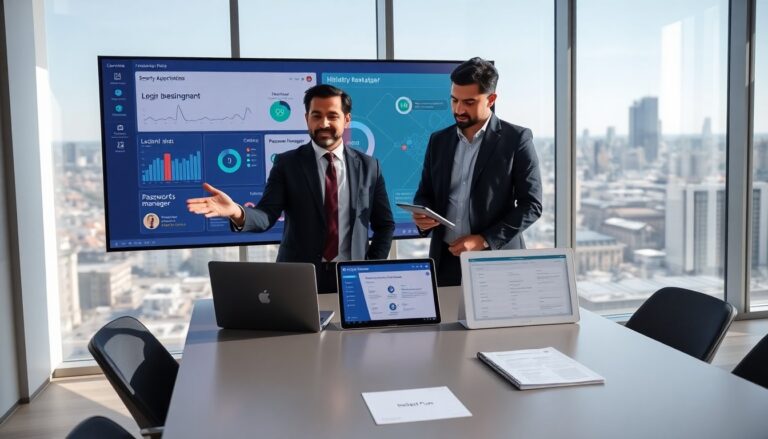
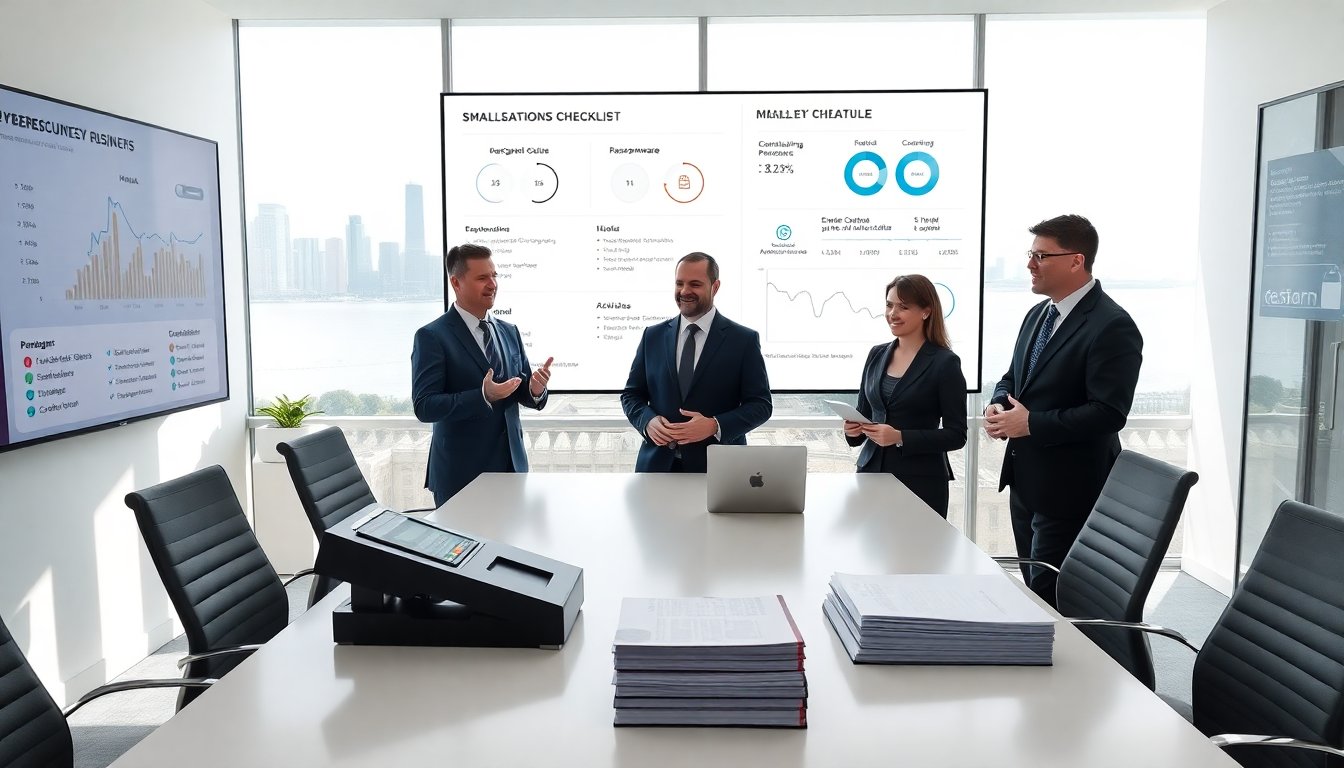

Cybersecurity Chicago needs clear action now. The guide targets small and mid-size businesses in Chicago. It explains local risks, basic controls, and how to pick local services. The guide uses plain steps and practical advice. It helps leaders reduce breach risk and meet compliance rules. It sets priorities they can carry out in weeks.
Key Takeaways
- Cybersecurity Chicago faces unique local risks including social engineering attacks targeting payment systems and phishing campaigns imitating local banks.
- Small and mid-size businesses should treat cybersecurity as a core business risk by assigning clear ownership and documenting critical assets and third-party connections.
- Essential controls include staff training on phishing, enforcing two-factor authentication, least-privilege access, endpoint protection, network segmentation, and secure cloud practices.
- Chicago businesses must track local cyber threat alerts from government and business groups to stay updated on emerging attack patterns.
- Choosing local cybersecurity services requires checking references, verifying certifications, and matching vendor offerings to internal skills and budgets.
- Developing an incident response plan with local contacts and running biannual tabletop exercises ensures preparedness for breaches while maintaining compliance with state laws.
The Cyber Threat Landscape In Chicago: Local Risks, Trends, And Notable Incidents
Chicago firms face specific cyber threats. Attackers target payment systems at restaurants and retail stores. They also target professional services that hold client records. City agencies report increases in phishing and ransomware. In 2024, a mid-size healthcare provider in Chicago suffered a data theft that exposed patient records. The incident cost the firm millions and damaged trust.
They see two trends. First, attackers favor social engineering. They send convincing emails that imitate local banks and utilities. Staff click links and give credentials. Second, attackers automate scans for exposed cloud storage and misconfigured servers. They find weak or public-facing systems and exploit them.
Local risks vary by sector. Restaurants, hotels, and retail face point-of-sale risks. Law firms face risks from client data exposure. Manufacturing firms face risks to operational systems and supply chains. Nonprofits face risks from volunteer devices and limited budgets.
Chicago businesses should track local alerts. The Illinois attorney general and the City of Chicago publish breach reports and advisories. Local business groups and banks also issue bulletins. They should use these sources to learn about current phishing campaigns and common attack patterns.
They should treat cyber risk as business risk. They should assign clear ownership of cybersecurity duties. They should document assets, map critical data flows, and list third-party connections. This simple inventory helps them focus defenses where breaches would cause the most harm.
Essential Cybersecurity Controls For Chicago Organizations: People, Process, And Technology
People must form the first line of defense. Leaders must set clear policies and training schedules. Staff must complete short, recurring training on phishing and password hygiene. They must use two-factor authentication for email and admin accounts. Managers must test staff with simulated phishing. Tests must measure clicks and remediation actions.
Process must reduce human error. They must enforce least-privilege access. They must require role-based accounts and remove access promptly when staff leave. They must log and review access to critical systems. They must maintain a simple incident response checklist that defines who calls vendors, who notifies regulators, and who informs customers.
Technology must cover common attack vectors. They must deploy endpoint protection on all company devices. They must enable automatic updates for operating systems and business software. They must segment networks so point-of-sale systems cannot reach corporate servers. They must encrypt sensitive data at rest and in transit.
They must secure cloud services. They must audit cloud storage permissions and remove public access. They must enforce strong API keys and rotate them regularly. They must use secure backups stored offline or in a separate account. They must test backups monthly to confirm restore operations.
They must measure progress. They must track phishing click rates, patch levels, and failed login attempts. They must set clear targets and review metrics monthly. They must align controls with common standards such as NIST Cybersecurity Framework or CIS Controls. These standards give simple checklists they can use to prioritize actions.
How To Choose Local Cybersecurity Services, Compliance Resources, And Incident Response Plans
They must evaluate local cybersecurity vendors with clear criteria. They must check references from other Chicago firms. They must ask for examples of recent work and for proof of insurance and certifications. They must confirm the vendor offers 24/7 monitoring and clear response times. They must demand a simple scope that lists deliverables and reporting frequency.
They must compare managed service providers and local consultants. A managed service provider can handle monitoring, patching, and endpoint defense. A consultant can perform gap assessments and compliance audits. They must match vendor services to their internal skills and budget.
For compliance, they must map legal requirements to business processes. They must identify data subject to HIPAA, PCI DSS, or Illinois data protection rules. They must document how they protect that data and who has access. They must plan for breach notification timelines under state law.
They must create an incident response plan that uses local resources. They must list internal roles and local contacts for legal counsel, forensics, and public relations. They must include contact details for local law enforcement and the Illinois attorney general. They must run tabletop exercises twice a year to test the plan. Exercises must follow simple scripts and measurable outcomes.
They must set a realistic budget. They must prioritize high-impact, low-cost controls first. They must fund monitoring, backups, and basic staff training before advanced tools. They must review vendor contracts annually and adjust services as threats change.