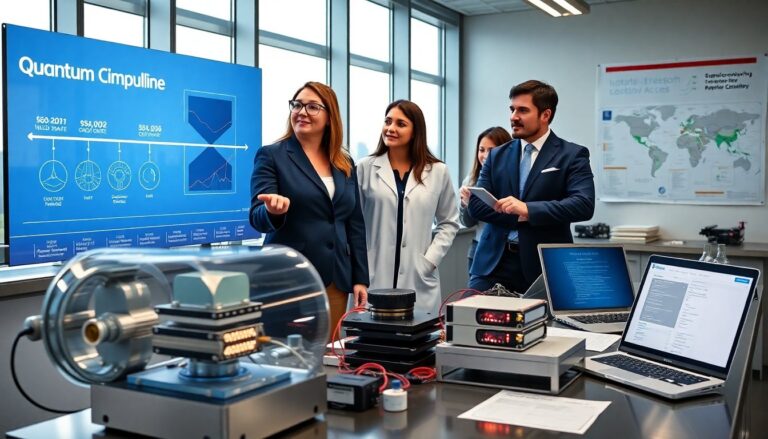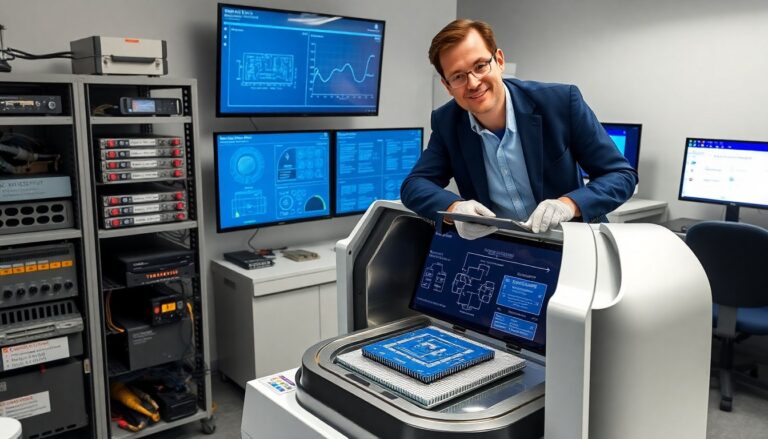
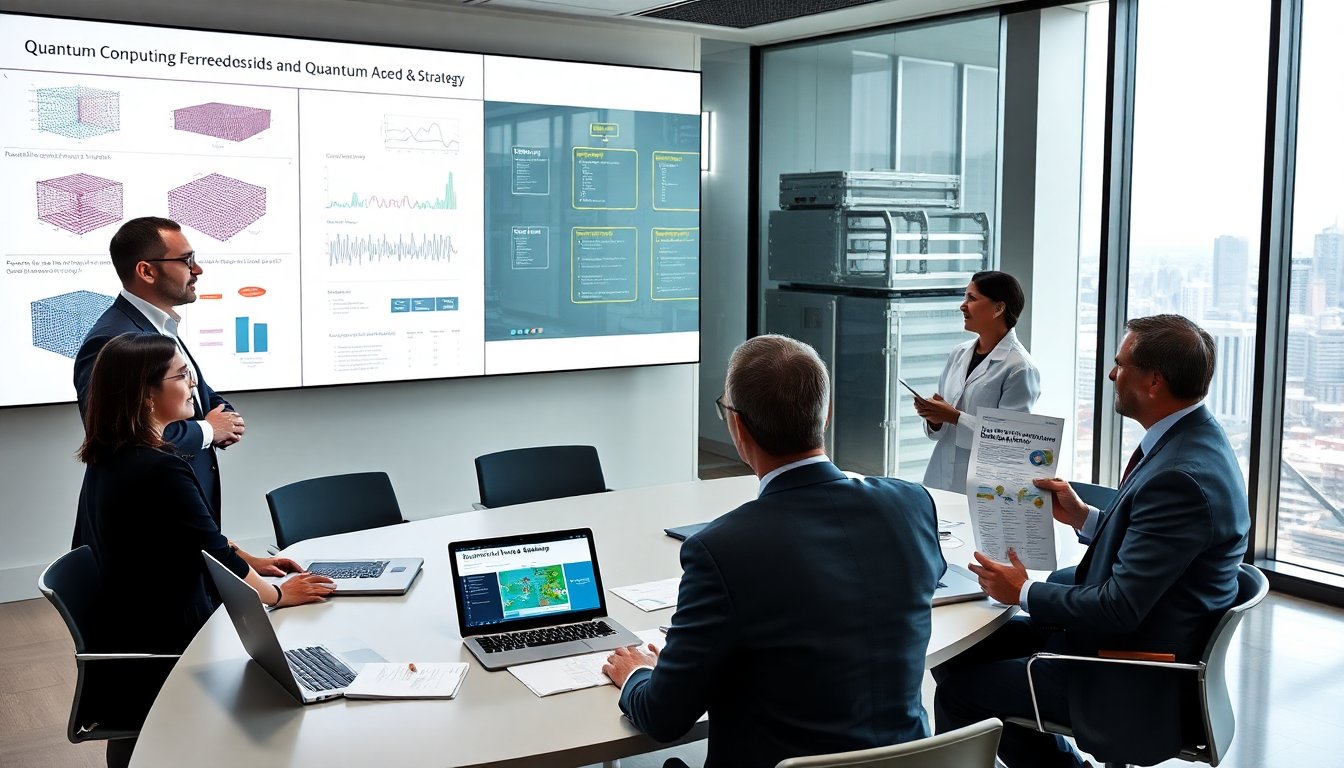

Quantum computing progress appears across labs and startups in 2026. The field shows steady gains in qubit quality, error rates, and system scale. Researchers report clearer benchmarks and repeatable experiments. Investors fund hardware and software work. Policymakers set standards. This article summarizes recent breakthroughs, current limits, and near‑term use cases to help readers judge what part of quantum computing progress matters now.
Key Takeaways
- Quantum computing progress in 2026 is marked by improved qubit quality, increased system scale, and clearer benchmarks across multiple hardware platforms.
- Recent breakthroughs include enhanced qubit coherence, higher gate fidelity, and the demonstration of quantum advantage on specific tasks accepted by the research community.
- Despite advances, challenges remain such as noise, error correction scale, precise control, and supply constraints that limit broad adoption.
- Near-term applications focus on quantum chemistry, materials modeling, and optimization heuristics with hybrid quantum-classical workflows showing promise.
- Investors and policymakers emphasize measurable benchmarks, reproducible experiments, and realistic roadmaps to track genuine quantum computing progress.
- Watch for continued improvements in gate fidelity, logical qubit counts, and integrated quantum application demonstrations as indicators of meaningful quantum computing progress.
Recent Breakthroughs And Milestones
Researchers reported several measurable gains in quantum computing progress in the last two years. Teams improved qubit coherence times and gate fidelity. They increased device sizes from dozens to low hundreds of qubits with clearer characterization. Companies validated error mitigation routines that reduce logical error rates in practical experiments. Academic groups demonstrated quantum advantage on narrow tasks that match specific classical benchmarks. These demonstrations used problem formulations that the research community accepts as meaningful.
Hardware makers advanced three device types. Superconducting platforms raised two‑qubit gate fidelity past key thresholds in controlled tests. Trapped‑ion groups scaled linked qubit chains while keeping single‑qubit error low. Neutral‑atom teams showed fast programmable arrays that suit some sampling tasks. Each platform shows progress on different metrics. The field moved from chasing raw qubit counts to chasing system performance that matters for algorithms.
Software and algorithms also moved forward. Error correction codes progressed from small lab tests to modest logical qubit experiments. Compilers learned to match algorithm structure to hardware limits. Hybrid classical‑quantum workflows improved for variational methods and quantum simulation. Benchmark suites matured. These software advances helped make quantum computing progress clearer to funders and users.
Policy and standards advanced too. National labs published reproducible benchmarks and best practices for reporting performance. This clarity helped buyers and researchers compare systems. Venture funding continued, but investors now ask for benchmarked results and realistic roadmaps. Overall, the recent milestones show steady, verifiable quantum computing progress rather than a single dramatic leap.
Practical Challenges And Current Limitations
Quantum computing progress still faces clear limits that slow broad adoption. Noise remains the main hardware challenge. Qubits lose coherence and gates introduce errors. Error correction requires many physical qubits to protect a single logical qubit. That scale still exceeds current devices for most useful problems.
Control and fabrication pose other limits. Teams need precise control electronics and repeatable fabrication to make many qubits with uniform quality. Supply chains for cryogenic parts and vacuum systems create cost and scaling constraints. Software faces limits as well. Compilers must bridge hardware idiosyncrasies and algorithm needs. This gap forces algorithm designers to tune methods for each device, which slows deployment.
Application limits matter too. Most practical problems that run faster on quantum hardware require either error‑corrected logical qubits or algorithms tailored to near‑term machines. Current machines show promise for quantum chemistry simulation, optimization heuristics, and materials modeling at small scales. They do not yet solve industry‑scale problems faster than classical supercomputers in general.
Economic limits appear as well. Building and operating quantum centers remains expensive. Skilled staff remain scarce. Companies must balance long research horizons with investor expectations. These constraints do not stop progress. They do shape realistic timelines and set which use cases get priority. Stakeholders now measure quantum computing progress in usable metrics rather than hopeful projections.
Near‑Term Applications, Roadmap, And What To Watch
Observers judge quantum computing progress by near‑term impact and by clear milestones on roadmaps. In the next two to five years, expect focused applications and scaled experiments rather than general commercial breakthroughs. Researchers will push error mitigation, hybrid algorithms, and small‑scale simulations that show clear value.
Near‑term use cases concentrate on chemistry and materials. Teams will use quantum processors to model small molecules and reaction pathways that classical methods struggle to handle precisely. Companies in pharmaceuticals and materials will run pilot studies that combine quantum subroutines with classical workflows. These pilots will reveal when quantum steps provide actionable insight.
Another near‑term area is optimization. Quantum heuristics and quantum‑inspired methods will help improve logistics, scheduling, and design problems at limited sizes. Teams will compare hybrid runs against advanced classical solvers to find niches where quantum steps yield improvement. Expect many experiments that show incremental gains rather than overnight disruption.
Roadmaps now emphasize measurable checkpoints. Stakeholders will watch logical qubit counts, end‑to‑end application demos, and consistent benchmark results over months. They will also watch ecosystem growth: open tools, reproducible benchmarks, and standardized reports. Progress in these areas will lower adoption friction.
What to watch in 2026 and beyond: improved gate fidelity across platforms, a steady rise in the number of useful logical qubits, and clear application demos that integrate quantum steps into classical pipelines. Readers should watch independent benchmarks and repeatable experiments. These items will mark real quantum computing progress rather than marketing claims.