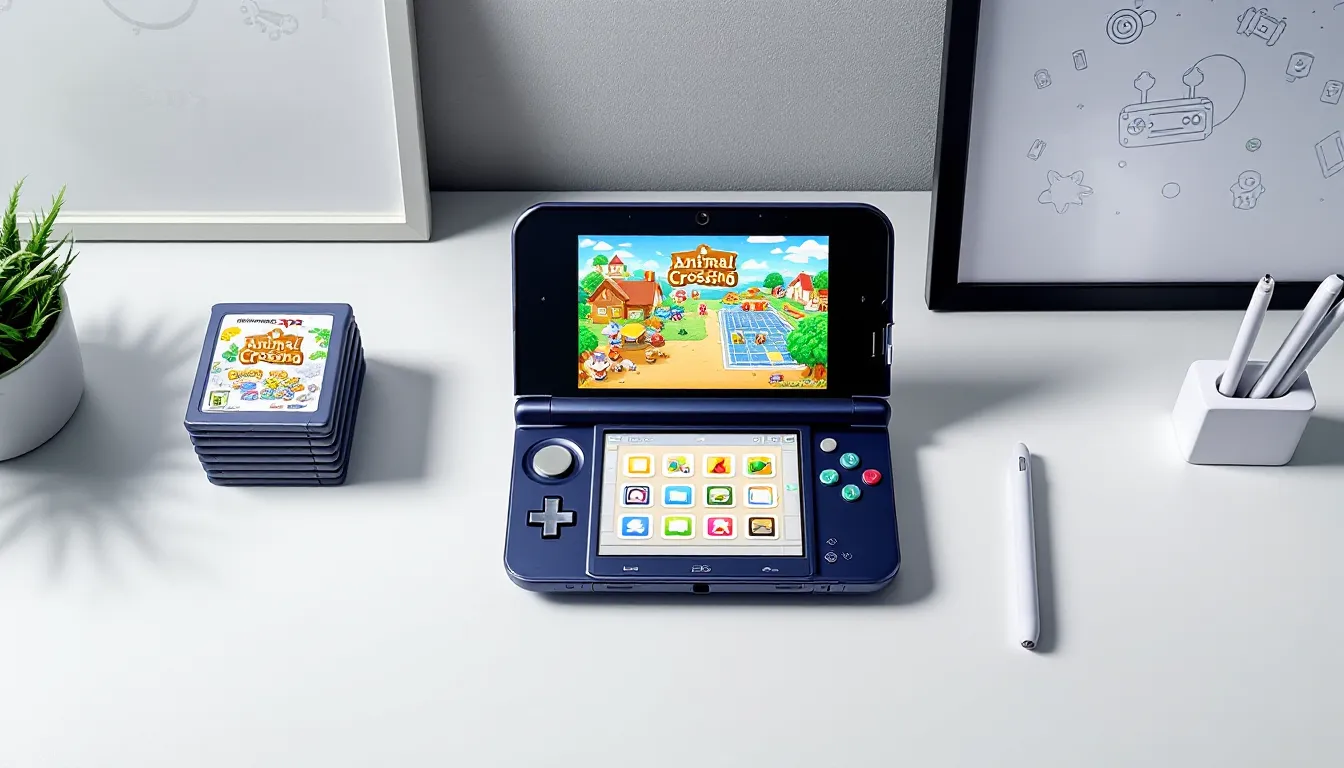

The Nintendo 3DS might be a relic by modern standards, but the library of 3DS simulation games remains one of the most charming and diverse collections ever released on handheld hardware. Whether you’re hunting for hidden gems, revisiting childhood favorites, or discovering why certain titles are still worth your time in 2026, this genre thrived on the 3DS. Life sims, business managers, strategy builders, and sports simulators all found a home on this dual-screen platform, many of them becoming franchise cornerstones that still influence games today. If you’ve got a 3DS gathering dust in a drawer, it’s worth dusting off. The simulation games on this system offer something modern titles often overlook: timeless, relaxing gameplay that doesn’t demand photorealistic graphics or always-online connections. Let’s dig into what makes 3DS simulation games special and which ones are absolutely worth playing.
Key Takeaways
- 3DS simulation games offer timeless, relaxing gameplay that doesn’t require photorealistic graphics or online connectivity, making them perfect for short bursts of play on-the-go.
- Life sims like Animal Crossing: New Leaf and Tomodachi Life prioritize creative expression and character-driven narratives over pressure-based progression, defining what makes 3DS simulation games special.
- Management and farming sims such as Harvest Moon and Story of Seasons reward long-term planning and optimization, encouraging players to think strategically between gaming sessions.
- 3DS simulation games pioneered core mechanics that modern titles still build upon, from Animal Crossing: New Horizons’ island customization to Fire Emblem: Three Houses’ relationship systems.
- The discontinued 3DS library represents a complete, self-contained catalog that never receives balance-breaking updates or seasonal content treadmills, ensuring lasting value for players.
- Strategy sims like Fire Emblem: Awakening and Civilization Revolution 2 deliver tactical depth on handheld hardware, proving that complex gameplay doesn’t require cutting-edge technology.
What Are 3DS Simulation Games?
Simulation games are all about letting you inhabit a role or manage a system without the pressure of a fail state. In a 3DS sim, you might run a farm, build a city, raise virtual creatures, or organize your dream town, all at your own pace. Unlike action games that demand split-second reflexes, sims reward planning, patience, and creativity.
The 3DS was tailor-made for this genre. The portable nature meant you could play in short bursts during a commute, then pick it back up days later without losing progress. There’s no timer counting down: you control the pacing entirely. Simulation games on 3DS lean into accessibility while respecting player intelligence, they rarely hold your hand, but they’re rarely unfair either.
What separates 3DS sims from their modern counterparts is the variety of approaches. You’ve got relaxing life sims like Animal Crossing, grind-heavy management games like Story of Seasons, strategic sims like Fire Emblem, and everything in between. The 3DS library proves that simulation games don’t need cutting-edge tech to be engaging: they need good mechanics and respect for player time.
Life Simulation Games for 3DS
Life sims are the bread and butter of 3DS gaming. These games invite you to create a character, build a community, and shape your virtual existence. They’re the opposite of grind-heavy MMOs, there’s no endgame, no pressure, just living.
Animal Crossing: New Leaf
Animal Crossing: New Leaf (2012, expanded in 2016 with Welcome Amiibo) is the gold standard of 3DS life sims. You inherit a house in a village populated by anthropomorphic animals, and from there, you do whatever you want. Want to fish all day? Fish. Want to collect insects? Go for it. Want to decorate your house obsessively? That’s the real endgame.
New Leaf’s hook is the real-time clock. The game world changes with the actual time of day and season, meaning certain fish, bugs, and villagers only appear at specific times. This encourages daily playtime without ever feeling mandatory, you log in when you feel like it. The furniture and customization options are staggering: fans discovered thousands of items you could catalog and arrange. The Welcome Amiibo update in 2016 added new features and refreshed the experience for returning players.
What makes New Leaf timeless is its lack of objectives. There’s no winning Animal Crossing: you’re just living a life parallel to your own. That simplicity is profound.
Tomodachi Life
Tomodachi Life (2013) is Animal Crossing’s weirder cousin. Instead of a village, you build an island populated by Mii characters, custom avatars you create yourself or import from friends. The game generates bizarre scenarios based on these characters, and chaos ensues.
You’re a landlord managing apartments, setting up relationships, watching your Miis bicker and romance each other. The humor is absurd in the best way: two of your Miis might fall in love, have a fight, reconcile, and start a band within a single day. You influence outcomes through gifts and interior design, but the island largely runs itself, often in completely unhinged directions.
Tomodachi Life is less “life simulator” and more “relationship chaos generator,” which is fine because it’s hilarious. If you want something more grounded and peaceful than New Leaf but equally charming, this is it.
Fantasy Life
Fantasy Life (2012 in Japan, 2014 in the West) is the RPG version of a life sim. You create a character and choose a “Life”, think of it as a job class. Want to be a blacksmith? A cook? A miner? A paladin? You pick one and the game opens up accordingly.
The genius is that every Life is a complete progression system. As a blacksmith, you craft items for other players (NPCs), earn money, and unlock better recipes. As a paladin, you engage in traditional fantasy combat and dungeon diving. As a cook, you prepare dishes that buff you and other players. Every Life has its own questline, its own rhythm.
Fantasy Life nails the fantasy-life power fantasy, you’re truly living out your role, not just playing a job class in a traditional RPG. It respects your time investment: even casual play feels rewarding. The game released post-launch DLC with additional Lives, making it one of the 3DS’s deepest simulations.
Business & Management Simulation Games
If you want numbers, systems, and feedback loops, business and management sims deliver. These games reward optimization, planning, and long-term thinking. They’re harder than life sims but incredibly satisfying once systems click.
Harvest Moon: A New Beginning
Harvest Moon: A New Beginning (2012 in Japan, 2013 in the West) puts you in charge of a farmstead on the brink of collapse. You inherit an overgrown farm and must restore it to profitability by growing crops, raising animals, and completing town requests.
The core loop is simple but dense: plant seeds, water crops, harvest, sell for profit, reinvest. But variables pile up, crop seasons, animal happiness, NPC relationships, weather, festivals, and marriage candidates all interlock. Success requires planning. Which crops maximize profit this season? Should you buy that cow or invest in barn upgrades? Do you have time to court someone while maintaining your farm?
A New Beginning is one of the Harvest Moon series’ better entries because it respects pacing. You’re not forced to play optimally: casual farming is viable. But optimize players will find deep systems to master. The game offers multiple endings based on your choices, giving reason to replay.
Story of Seasons
Story of Seasons (2014 in Japan, 2015 in the West) is the spiritual successor to Harvest Moon after the series’ publisher split. It’s a bigger, more ambitious farm sim with significantly more content and complexity than A New Beginning.
You manage a farm across seasons and years, facing more demanding goals, a larger cast of marriageable characters (same-sex marriages are supported), and deeper crafting systems. There are festivals every few in-game days, each with unique rewards and mechanics. The fishing, cooking, and crafting systems feed into each other: you’re constantly optimizing production chains.
Story of Seasons is demanding. It’s not a relaxing farm sim: it’s a farming optimization puzzle. You’ll need to plan seasons ahead, manage resources ruthlessly, and accept that you can’t do everything in a single playthrough. That’s the appeal, replayability and mastery go hand-in-hand.
Rune Factory 4
Rune Factory 4 (2012 in Japan, 2013 in the West) is the wildcard: farm sim meets action RPG meets fantasy adventure. You wake up in a castle with amnesia and must restore order to the kingdom while managing a farm on the side.
The hook is scope. You farm, yes, but you also dungeon dive, craft weapons and accessories, romance villagers, and participate in major plot events. Combat is real-time action, not turn-based, making it feel more immediately engaging than Harvest Moon. The magic system is deep: you customize spells to fit your playstyle.
Rune Factory 4 never settles into routine like Harvest Moon does. There’s always something new, a festival, a dungeon, a story beat, a new craft recipe. If you want farming with adventure, combat, and progression, this is the 3DS answer.
Strategy & City Building Sims
Strategy sims on the 3DS prove that tactical depth and handheld gaming aren’t mutually exclusive. These games reward planning, positioning, and decision-making over reflexes.
Fire Emblem: Awakening
Fire Emblem: Awakening (2012 in Japan, 2013 in the West) is a tactical RPG that deserves mention here because beneath the combat lies intricate relationship and progression systems that function like a sim.
You control a squad of units on a grid-based battlefield, but the game’s real depth emerges between fights. Characters develop relationships through support conversations, talk to the same character repeatedly, and their bond deepens. Relationships affect in-battle performance: paired units fight better together. Marriage is possible, and offspring inherit stats and abilities from their parents, letting you breed ideal units across generations.
The permadeath Classic Mode adds stakes (though Casual Mode removes them), but the real hook is character building and relationship optimization. Should you pair A with B for better stats, or should you honor player preference? Do you grind supports, or push through the campaign? It’s half tactical game, half relationship sim, and entirely excellent. Recent coverage from gaming news outlets like Siliconera frequently revisits Awakening’s influence on the tactical RPG genre and Fire Emblem’s modernization.
Civilization Revolution 2
Civilization Revolution 2 (2014) brings the legendary turn-based strategy series to 3DS with surprising depth. You build a civilization from ancient times to the future, managing culture, science, military, and economy.
Each turn, you expand territories, establish cities, research technologies, and decide whether to pursue cultural, scientific, or military victory. The AI plays fairly (on higher difficulties), forcing genuine strategy. Resource management is key: spreading too thin militarily leaves your economy weak.
Civilization Revolution 2 is slower than its PC counterparts, fewer units, less granular control, but it’s still chess-like in depth. A single campaign takes 5-10 hours, perfect for handheld play. The 3DS’s two screens let you manage resources on one and view the map on the other, a smart use of hardware.
Sports & Racing Simulation Games
Sports sims on 3DS range from arcade-style racers to statistical management games. They’re niche, but certain titles have cult followings.
Mario Kart 7
Mario Kart 7 (2011) isn’t a traditional sports sim, it’s a racing arcade game, but it’s essential 3DS software. It’s lightweight fun that doesn’t demand serious commitment but rewards skill development.
You unlock karts and parts by racing, with customization affecting handling, speed, and acceleration. Online multiplayer was robust at launch (less so now that the service is down). The battle modes, Balloon Battle, Coin Runners, Bob-omb Blast, offer variety beyond racing.
Mario Kart 7 isn’t a career sim or a deep management experience, but it’s timeless arcade racing that works perfectly on 3DS’s small screen. If you want something lighter than the sims listed above, this scratches that itch.
Pro Baseball Spirits 2014
Pro Baseball Spirits 2014 (2014) is a Japan-exclusive baseball sim with surprising depth. You manage a team, draft players, develop talent through training, and compete across seasons.
The sim tracks hundreds of stats: player performance fluctuates based on form, fatigue, and matchups. You scout talent in the draft, develop young players through practice regimens, and negotiate contracts. Gameplay involves timing-based batting and pitching controls rather than stat comparisons.
Pro Baseball Spirits 2014 is a serious sports management sim, far deeper than arcade-style baseball games. If you can import a copy, it’s invaluable for fans of baseball sims who want something beyond the US-focused games.
Educational & Puzzle Simulations
Educational sims on 3DS blur the line between games and tools. They’re genuinely fun while delivering learning.
Pokémon Mystery Dungeon: Red Rescue Team DX
Pokémon Mystery Dungeon: Red Rescue Team DX (2020, a remake of the original 2005 Game Boy Advance game) is a dungeon-crawling roguelike where you manage a rescue team. You catch Pokémon, train them, outfit them with items, and tackle missions in procedurally generated dungeons.
The appeal is the progression system. You recruit Pokémon to your team, improve their stats through level-ups and item investment, and experiment with team compositions. The story is surprisingly emotional for a Pokémon game, adding weight to your team’s dynamics.
Red Rescue Team DX is more adventure than pure sim, but the team management and roguelike structure demand strategic thinking. Each dungeon requires preparation: you can’t brute-force content without proper loadouts. It’s educational in the sense that it teaches planning and resource management.
Brain Training
Brain Training (various titles, the original “Brain Age” or newer “Brain Training for Nintendo Switch”) launched on DS and saw 3DS ports. It’s straightforward: solve puzzles, math problems, and memory games daily to supposedly improve cognitive function.
Is it actually educational? Debatable. Neuroscientists remain split on whether brain-training games transfer to real-world cognition. But the games work as tools for practice and as data collectors: you track your “brain age” over time and compare scores with friends.
Brain Training isn’t a game you “play” for fun in the traditional sense. It’s a tool you use regularly, like a gym membership for your mind. If you’re into tracking personal metrics and habit formation, it’s surprisingly compelling. Recent discussions on gaming platforms like Twinfinite have covered whether these educational games still hold up or if modern brain training apps offer better value.
Why 3DS Simulation Games Still Matter
The 3DS went out of production in 2020, but its simulation library remains relevant in 2026 for several reasons.
First, these games don’t require online connectivity or constant updates to remain fun. Animal Crossing: New Leaf works today exactly as it did in 2012 (excepting the now-offline multiplayer features). There’s no battle pass, no seasonal content treadmill, no forced meta shifts. You buy it, you own it, and it doesn’t change.
Second, the 3DS library captures a pre-algorithm gaming era. Games were designed to be complete experiences, not engagement metrics. A Harvest Moon game expected you to play for 100+ hours, but never made you feel bad for only playing 5 hours in a week. That design philosophy is rarer now.
Third, the 3DS sim games pioneered mechanics that modern titles still build on. Animal Crossing: New Horizons (2020) is a direct descendant of New Leaf. Fire Emblem: Three Houses borrowed heavily from Awakening’s relationship systems. Rune Factory 5 (2021) iterated on Rune Factory 4’s formula. The 3DS didn’t invent these ideas, but it perfected them.
Finally, there’s the discovery angle. Most 3DS sim games are overlooked by younger players or modern reviewers. If you dig into the library, you’ll find games that provide exactly what you’re looking for, a relaxing life sim, a tactical challenge, a farm management experience, without the noise of current gaming discourse.
The 3DS library is complete and self-contained. You’ll never get new content, but you’re getting the full game. That’s increasingly rare.
How to Choose the Right 3DS Simulation Game for You
With dozens of sims available, narrowing down your choice depends on what you’re seeking.
If you want relaxation: Animal Crossing: New Leaf or Tomodachi Life. Both have no fail states, no timers, no pressure. Play whenever, but you want.
If you want to optimize and plan: Harvest Moon: A New Beginning, Story of Seasons, or Rune Factory 4. These demand engagement and reward planning. You’ll think about your playthrough between sessions.
If you want combat alongside sim elements: Rune Factory 4 or Fire Emblem: Awakening. Both blend action or tactical gameplay with progression and relationship systems.
If you want pure strategy: Civilization Revolution 2. Turn-based, methodical, and replayable.
If you want a “game” not a “lifestyle:” Pro Baseball Spirits 2014 or Mario Kart 7. These have defined campaigns and endpoints, not endless progression.
If you want character expression: Fantasy Life or Tomodachi Life. Fantasy Life lets you roleplay through multiple careers: Tomodachi Life lets you populate an island with your weird Mii creations.
Consider your time investment too. Animal Crossing is indefinite but requires daily check-ins to feel optimal. Story of Seasons demands consistent play over a season-long arc. Fire Emblem Awakening is campaign-focused, maybe 40-60 hours, then done (unless you replay).
Also check platform availability. Some games are Japan-exclusive or region-locked. News from outlets like Gematsu often covers region releases for Nintendo titles if you’re hunting obscure sims. Most titles listed above are globally available, but Pro Baseball Spirits 2014 is Japan-exclusive, you’ll need a Japanese 3DS or imported cartridge.
Conclusion
The 3DS’s simulation library represents a golden age of handheld gaming. These games were designed for play on-the-go, respecting your time while rewarding engagement. Whether you’re looking for the zen of Animal Crossing, the optimization puzzle of Story of Seasons, the tactical depth of Fire Emblem, or the chaos of Tomodachi Life, there’s a 3DS sim waiting for you.
The system is discontinued, but its catalog is finite and stable. You won’t get updates that break balance or cut content. What you’re buying is what you’re getting, and across the board, these games are complete and excellent.
Dig into the 3DS library. You might find your new favorite game.